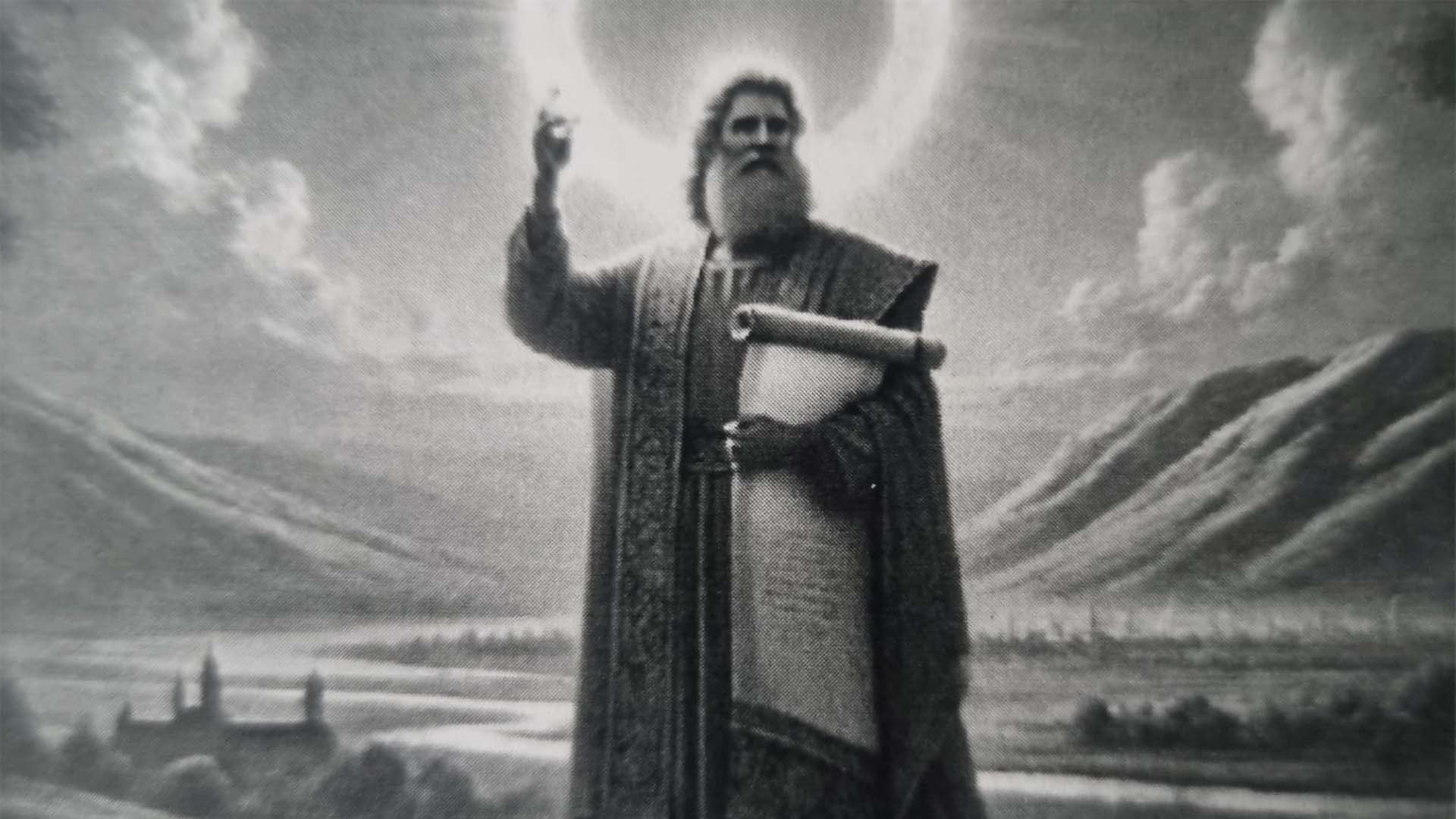

MEMORY SCRIPTURE
Then He said to them, “These are the words which I spoke to you while I was still with you, that all things must be fulfilled which were written in the Law of Moses and the Prophets and the Psalms concerning Me”
(Luke 24:44).
The Bible canon was formed by selecting scriptures to preserve doctrine and guard against false teachings.
DEVOTIONAL BIBLE READINGS
Mon. 13: Covenant Book Read To The People (Exo.24:7)
Tue. 14: Canonised Laws To Be Meditated Upon (Jos.1:8)
Wed. 15: Canonised Laws As Guide Under Joshua (Jos.8:30-35)
Thu. 16: Covenant Book Rediscovered By Hilkiah (2 Chro.34:14)
Fri. 17: Canonised Law Books In Nehemiah’s Time (Neh. 8:9, 14-17)
Sat.18: Canonised Laws Disdained By Ephraim (Hos.8:11-14)
*2. DEVOTIONAL THOUGHTS
God inspired certain persons to write the scriptures and guided others to compile the books of the Bible.
INTRODUCTION
TEXTUAL SOURCES: PSALM 68:11; MARK 1:1; LUKE 1:1-4; 24:44; 2 TIMOTHY 3:16; 2 PETER 3:15-16; REVELATION 1:3; 22:18-19
In the previous lesson, God guided us through the role of human agents ln publishihg and transmitting His Word. We bless His holy name for the powerful Word that continues to reach us.
This lesson is the 14th in the series, and it is titled: Formation Of The Bible Canon. The Bible Canon refers to the God-ordained
process that gave the Christian Church the 66 books of the Scripture, filtering out false writings. This lesson will be studied
in two parts: The Old Testament Canon and the New Testament Canon.
May the Holy Spirit help us make the most of the knowledge being revealed to us through this lesson.
LESSON OUTLINE
- OLD TESTAMENT CANON
- NEW TESTAMENT CANON
LESSON EXPOSITION
OLD TESTAMENT CANON (Ps. 68:11; Lk. 24:44)
Then He said to them, “These are the words which I spoke to you while was still with you, that all things must be fulfilled which were written in the Law of Moses and the Prophets and the Psalms concerning Me”.
(Lk. 24:44)
a) Lk.24:44: The OT is the first part of the Christian canon, with the NT forming the second. Neither is superior to the other, as together they make up the complete Scripture (2 Tim.3:16-17).
b) Jesus affirms the reliability and authority of the OT in Lk.24:44. The key question is: how were the books of the Old
Testament and the entire Bible, recognised as inspired and authoritative? (2Tim. 3:16; Heb.4:12).
c) Ps. 68:11: God continues to set watch over His Word: while some people were inspired to write, others were led to set rules that qualify, or disqualify their writings as Scripture, respectively-canonicity.
d) Some books sought recognition in the Old Testament Tanakh but were rejected as apocrypha, or “hidden.” Why were these deuterocanonical books excluded? The OT Canon distinguished the Law (Torah), Prophets and Psalms from these false scriptures (cf.2 Pet. 1:20-21).
NEW TESTAMENT CANON (Mk. 1:1; Lk. 1:1-4; 2 Tim. 3:16; 2 Pet. 3:15-16; Rev. 1:3;22:18-19)
As also in all his epistles speaking in them of these things in which are some things hard to understand, which untaught and unstable people twist to their own destruction, as they do also the rest of the Scriptures.
(2 Pet.3:16)
a) 2 Tim. 3:16: The NT canon is the collection of books used by the Church in public worship. This includes the Gospels,
Acts of the Apostles, the Epistles and Revelation, all of which are inspired and authoritative for faith and sound doctrine.
b) Mk. 1:1: The beginning of the gospel of Jesus Chris… Among the four Gospels, Mark’s Gospel was the first to be written,
likely in its current form around the year Jerusalem was destroyed,70 AD.
c) Lk. 1:1-4: … To write to you an orderly account..(v,3). There is little variation between when Luke wrote his account and
when it was recognised as Scripture, similar to`the other Gospels’ accounts.
d) The Gospels likely became widely known in local churches, where they were used in worship and teaching, Acts written by Luke, was leter canonised as the 2nd part of his writings, continuing the narrative of the early Church.
e) 2 Pet. 3:15-16: As also in all his epistles, … as they do also the rest of the scriptures (v. 16). In his epistle, Peter testifies to the authenticity of Paul’s letters as Scripture, confirming that they are part of the NT canon. This is as strong internal evidence of their inclusion since their compilation
f) Rev. 1:3; 22:18-19: Revelation is key, to the NT canon, containing 7 messages from Jesus to the churches in Asia Minor. These inspired messages warn and guide believers in their Christian walk.
LESSONS DERIVED
- God used the OT canon to separate true books from false ones. We must help filter out falsehood.
- The Church accepts 27 NT books as Scripture, alongside the Old Testamenat elther should be favoured over the other.
QUESTIONS
- Describe the process that separated the Scripture from other writings that sought recognition as Scripture. What is it called?
- How were the New Testament books canonised?